2025: A Turning Point for Belgium’s Nuclear Sector
Retrospective by Serge Dauby, our Managing Director

The year 2025 marks a milestone for Belgium’s nuclear sector. After more than two decades of uncertainty – initiated by the 2003 Nuclear Phase-Out Law – the federal Parliament has implemented a major strategic shift. With the adoption of the Bihet Law in May 2025, the phase-out was formally abandoned, opening the door to both the lifetime extension of existing reactors and the development of new nuclear capacity.
This decision reflects a clear ambition for Belgium’s energy future: safeguarding independence and security of supply, stabilizing electricity prices and structurally reducing CO₂ emissions.
Renewed stability in the political and societal debate
In 2025, a notable shift occurred in the political consensus. A broad majority in Parliament once again recognizes the strategic role of nuclear energy as a cornerstone of the energy transition. Public debate has also become more constructive, driven by increased awareness of geopolitical risks and the essential role of low-carbon baseload capacity alongside renewable energy sources.
Scientific and industrial expertise as a strategic asset
The sector’s revival was further strengthened by the strong performance of leading Belgian institutions such as SCK CEN, Tractebel and several academic partners. Their contributions to international research and development initiatives confirm that Belgium continues to possess unique, world-class nuclear expertise.
The challenges ahead, however, remain considerable. To meet its climate objectives, Belgium must significantly electrify its energy system, from mobility to heating and industrial processes. Today, the country consumes around 80 TWh of electricity out of a total energy use of more than 400 TWh. This gap illustrates the magnitude of the decarbonization effort still required. Even in the most optimistic scenarios, Belgium will need more than 80 TWh of additional electricity by 2050, comparable to our entire current electricity demand.
The need for a clear long-term vision
The conclusion is sobering: for more than twenty years, successive governments agreed to phase out nuclear power without ensuring a realistic and non-dogmatic solution to complete the energy transition successfully.
As a result of this lack of long-term vision, Belgium must now urgently develop a new plan of action. This plan will inevitably involve the construction of new low-carbon electricity generation capacity (both renewable and nuclear) and the reinforcement of our grid infrastructure.
The positive momentum of 2025 must not obscure the essential need for a coherent long-term strategy. Belgium requires a realistic, phased roadmap for the next 10, 20 or even 30 years, developed in close consultation with all relevant stakeholders.
The priorities are clear:
- Ensuring continuity of electricity supply throughout the electrification process.
- Making well-founded choices regarding nuclear technologies, including large-scale reactors and Generation III and IV SMRs, taking into account their expected deployment timelines.
- Establish facilities to recycle (reuse) our spent fuel (uranium) and ensure the closing of the nuclear fuel cycle.
- Identifying potential sites that best meet the needs of both the population and industry for the installation of new nuclear units.
- Strengthening the Belgian value chain by engaging companies and encouraging technical talent.
- Developing viable financing models aligned with Belgium’s current budgetary context.
The path ahead is ambitious but necessary. The alternative – structural dependence on expensive foreign and/or fossil-based electricity – is neither viable nor compatible with our country's climate goals.
Belgium strengthens its international position
In 2025, Belgian nuclear expertise was also recognized internationally. Noteworthy milestones included:
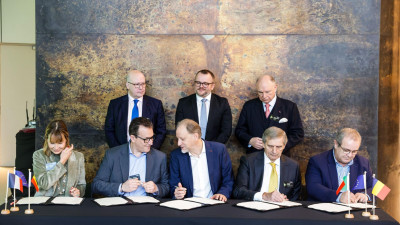
- The cooperation agreement signed in September 2025 between the Belgian Nuclear Forum and the French nuclear association GIFEN to intensify industrial collaboration and share expertise. This agreement complements the accord signed in July 2025 between Belgian Energy Minister Mathieu Bihet and his French counterpart.
- The establishment of a Flemish SMR Alliance in October 2025, of which the Belgian Nuclear Forum was one of the signatories, in the presence of Minister-President Matthias Diependaele. This initiative sends a strong signal to the Flemish industry and to potential foreign investors.
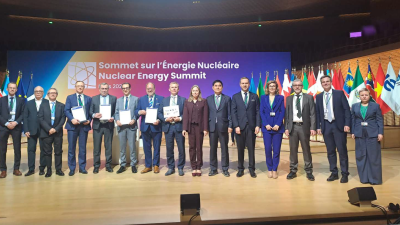
- The signing of a Letter of Intent in November 2025, during the World Nuclear Exhibition (WNE), between the Belgian Nuclear Forum and Ontario Power Generation (OPG, Canada) concerning the development of Small Modular Reactors in Belgium—an important technology for a flexible and low-carbon energy system.
- The remarkable success of the Belgian Pavilion at the WNE—the largest Belgian presence at the exhibition to date. Fifteen Belgian companies participated and returned with numerous orders, leads and highly valuable contacts.
Belgium thus regains a clear voice in this strategic debate. Meanwhile, several European countries—including France, the Netherlands, the United Kingdom, Czechia and Poland—announced renewed nuclear ambitions.


A national Task Force as catalyst
To secure the course now set, the creation of a national Task Force is essential. This body must bring together industrial players, sector federations, research centers, federal and regional authorities and international partners to coordinate nuclear projects, mobilise companies and strengthen the inflow of technical talent.
At the same time, it is vital to send a clear signal to Belgian industry: our country is once again committed to nuclear energy as a driver of innovation, growth and energy security.
Conclusion
The renewed expansion of nuclear energy in Belgium will have major consequences: reduced CO₂ emissions through increased low-carbon electricity production, improved security of supply in an uncertain geopolitical context, new industrial and technological opportunities, the creation of thousands of jobs across all sectors and greater influence in European energy transition debates.
2025 was the year in which Belgium redefined its energy trajectory. To make the nuclear renaissance a reality, sustained cooperation and a clear long-term vision are essential. Establishing a national nuclear task force is key to converting momentum into tangible results. This will provide Belgian industry with the confidence needed to invest, innovate and help build a sustainable energy future.
The Belgian Nuclear Forum remains committed to supporting this evolution and to uniting the sector around a shared objective: positioning nuclear energy as a strategic asset for Belgium’s future.