“Together Towards New Nuclear”: event on 18 November 2024 great success!

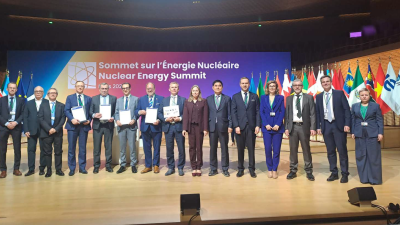
On 18 November 2024, Belgian Nuclear Forum, together with KPMG in Belgium, hosted an event on the future of nuclear energy in Belgium, “Together Towards New Nuclear”. They hosted more than 100 key players of the Belgian industry and energy supply chain, politicians at the federal and European level, and (inter)national key contacts in the nuclear sector to discuss the need for and future of nuclear energy. The pressing question on how to finance new nuclear in Belgium was also treated: a clear regulatory framework and appropriate funding mechanism beyond free market forces seems to be crucial to support nuclear development and secure the country’s energy needs.
Electricity demand in Belgium is set to rise sharply in the coming years due to the electrification in industries and households (think of heat pumps and electric cars). The rapid growth of data centers and AI technologies will even further increase this electricity demand. Nuclear energy not only addresses the need for low-carbon energy in the transition to a clean energy mix, but it also answers the need for a reliable base load to keep factories and data centers running around the clock, contributing to a much-needed energy security for the industry. Next to its low-carbon electricity, new nuclear power plants can provide heat and molecules for industrial processes that are hard to electrify.
The Belgian industry is in favor
Today, Belgian and European industry is particularly struggling due to relatively high energy prices and tighter climate policies, especially compared to the United States or other regions. Big industrialists also have serious doubts whether sufficient low-carbon energy will be available in Europe and Belgium at a competitive cost. Never before have they raised their voices so clearly and publicly in favor of nuclear power, existing and new build capacity.
Program of the event
At a previous event (in March 2024), the participants to the round table discussion concluded that new nuclear in general and SMRs in particular are emerging as a potential solution to Belgium’s energy challenges, offering opportunities for a sustainable, reliable, flexible and affordable energy production, which is essential to ensuring the global competitiveness of our industry.
But how will we make this happen? How do we reinforce the nuclear supply chain? Which legal and regulatory frameworks should be put in place to drive nuclear development? How will the large capex program be financed? Those topics were at the heart of the discussions during the “Together Towards New Nuclear” event on November 18th.
An overview of our speakers and panelists:
- Archie Manoharan, Director of Nuclear Technologies at Microsoft
- Geoffrey Olynyk, Director of Strategy and Business Development at OPG (Ontario Power Generation)
- Kirsty Gogan, Founding Director and Co-CEO at Terra Praxis
- Grégoire Dallemagne, CEO at Luminus
- Alberto Fernandez Fernandez, Director Nuclear Applications at FPS Economy
- Mothi Sayeeram, Partner Power & Utilities at KPMG UK
- Ximena Vasquez-Maignan, Counsel at White & Case
- Gilles Chaput, Director in the Energy, Resources and Infrastructure team at BNP Paribas
- Philippe Alboort, Energy Manager Ghent Plant at ArcelorMittal
- Michel Vanhaesbroucke, Chief Strategy Officer at John Cockerill
- Peter Claes, Director at Febeliec
- Frédéric Dunon, CEO at Elia Transmission Belgium
- Denis Dumont, Chief Nuclear Officer at Tractebel
- Stefano Buono, CEO at newcleo
Relive the atmosphere of the event with our aftermovie
Financing new nuclear
To develop new nuclear projects, an appropriate funding mechanism is crucial. The right funding mechanism should be carefully considered, as each one has its advantages and challenges.
“Simply relying on the free market isn't enough. In an electricity market largely driven by renewable energy, power prices often drop to low or even negative levels. This situation makes it impossible for new nuclear power plants to recover their significant investment costs. No new nuclear facility has been constructed anywhere in the world based solely on market forces because the risks are too high. Existing nuclear plants were built in a regulated environment that effectively managed those risks”, added Magali Vercammen, Energy Lead at KPMG in Belgium.
Conclusions
One of the main takeaways of the event is that nuclear power will have a crucial role to play in the future energy mix of our country, to ensure the security of supply of low-carbon energy at a competitive cost. A strong collaboration between the industry, the energy sector, and the government will be essential in order to realize this challenge. It is now high time to make this more concrete, with a clear call for action to all stakeholders who want to participate in new nuclear power.
Quotes from some of the speakers at the event
“To ensure the successful revival of nuclear energy in Belgium, we must adopt a comprehensive industrial vision that unites all stakeholders - industrials, policymakers, investors, supply chain and safety authorities. Beyond the capital investment, nuclear energy is a highly competence-intensive industry that demands expertise and collaboration. By engaging in international nuclear projects and fostering cross-sectorial synergies, we can approach the construction of nuclear new build projects with the same efficiency as gas power plants and make sure they are delivered on time, on scope, and on budget.” – Denis Dumont, Chief Global Nuclear Officer at Tractebel
“As far as nuclear is concerned, Belgium has huge potential and opportunities to lock in future energy security and independence. Belgium was one of the first countries in Europe to benefit from advanced nuclear technology and its long expertise in nuclear R&D makes it very well placed to take advantage of the sector’s latest developments which could include the reuse of spent nuclear fuel to power a new generation of small reactors. For our part at newcleo, we are keen to explore these opportunities and how Belgium could not only secure a sustainable energy future for itself but also the role it could play in supporting a wider European energy transition.” – Stefano Buono, founder and CEO of newcleo
“We must urgently take the necessary measures and help the next government to draw up a realistic action plan to decarbonize our industry in the medium and long term. To do this, we need to bring together the main actors of this energy transition, meaning both the industrial players, who are major energy consumers and are particularly concerned about the decarbonization of their production processes (for them, this is an essential issue, even a matter of survival in our country), and the actors who make up the supply chain and will implement tomorrow's low-carbon solutions. We must build this new approach together and not act individually.” - Serge Dauby, Managing Director of the Belgian Nuclear Forum
“The demand for clean energy is huge. This demand cannot be met with specialized, complicated, and expensive energy services that take years to license and construct and do not have access to mainstream finance. Innovations in design, manufacturing, licensing, and deployment are needed to enable nuclear energy to meet global demand at the speed, scale, and costs required to achieve global decarbonization and universal access to modern energy services.” – Kirsty Gogan, Founding Director and Co-CEO of Terra Praxis