Belgian research reactors
Belgian research reactors
Belgium is a major centre of expertise in nuclear technology and know-how. Belgium has historically built up this nuclear know-how and has since developed and expanded it. The various research reactors built in Belgium over the past few decades stand as a living testament to this long-standing nuclear expertise. Let’s take a look at them.
Belgian Reactor 1 (BR1)
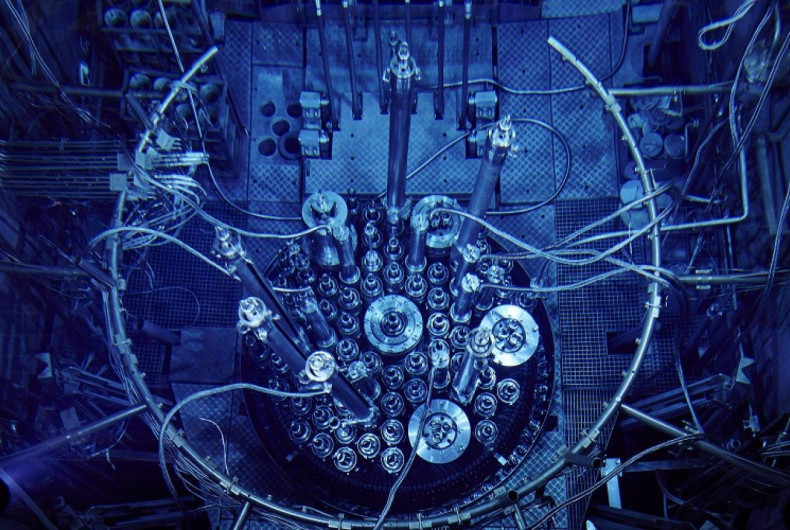
Belgian Reactor 1 (BR1) is an air-cooled, graphite-moderated nuclear reactor with a power output of 4 MWh. This first Belgian nuclear reactor (hence its name) was built as a test reactor for the purpose of conducting scientific experiments. It became operational in 1956 and was the first research reactor at the Centre for Nuclear Energy Studies in Mol.The BR1 is a critical reactor (typical for a nuclear reactor), meaning that a chain reaction sustains the fission process. It is frequently used as a neutron source for activation analysis, dosimetric calibration, neutron radiography and reference reactor experiments. Until 1964, it was also used for the production of medical isotopes. It is also used as a training centre for Belgian and international university students. It is also suitable for silicon doping.
Despite its advanced age, the BR1 is not yet ready to be shut down. No budgetary or safety issues are jeopardising its future: a team of five people is sufficient to carry out all the research and perform the regular safety checks. Thanks to its low power output (700 kW on average, 1 MW at peak times), the BR1 consumes virtually no electricity or nuclear fuel. The current fuel rods will continue to provide energy for a very long time to come.
Belgian Reactor 2 (BR2)
BR2 (Belgian Reactor 2) is one of the most powerful and flexible research reactors in the world. It is also in operation at the SCK·CEN site in Mol. The reactor has been fuelled by uranium since it was commissioned in 1962. Pressurised water serves as both the coolant and the moderator. In 2015 and 2016, BR2 underwent extensive maintenance and modernisation to ensure it can continue to be used to its full potential in the years to come as a versatile research facility and as a major supplier of medical isotopes and doped silicon. Let us take a brief look at the key tasks of BR2 and its vital role as a globally recognised and relevant research facility:
- Fuel and materials research. BR2 plays an important role in international research into the behaviour of materials in a nuclear reactor. For example, at BR2 we irradiate all kinds of nuclear fuels and structural materials for various types of reactors and for the European nuclear fusion programme. Thanks to the intense radiation, we can study the ageing of these irradiated materials. BR2 thus contributes to the safety of existing and new nuclear reactors.
- Production of radioisotopes. BR2 accounts for 20 to 25 per cent of total global production of the most important radioisotopes. If necessary, production can be increased to up to 65 per cent. These radioisotopes are essential for the diagnosis and treatment of cancer, amongst other things. Other applications can be found in industry, such as systems for inspecting welds and determining the density and moisture content of materials.
- Doped silicon. Silicon is irradiated within the BR2 reactor, thereby producing doped silicon. This is a high-quality semiconductor. For certain applications, only silicon irradiated in a nuclear reactor is suitable. These semiconductors form, for example, the base material for electronic components in solar and wind energy systems, hybrid cars and high-speed trains.
- Neutrino detection. A consortium of Belgian, British and French scientists has successfully developed and installed a new type of neutrino detector in the BR2 research reactor. This ambitious project, known as SoLid (‘Search for oscillation with a Lithium-6 detector’), aims to answer a fundamental question in particle physics that has been driving the scientific community for years: do sterile neutrinos exist? The discovery and direct observation of neutrinos would represent a huge step forward for particle physics, bringing us a little closer to understanding the fundamental particles that make up the universe.
Belgian Reactor 3 (BR3)
The BR3 (Belgian Reactor 3) was in operation as a prototype pressurised water reactor from 1962 to 1987. This type of reactor is the most common in nuclear power stations worldwide. The BR3 was the first of its kind in Europe and, in a few years’ time, will be the first of its kind in the world to be completely decommissioned.
Europe chose the BR3 to carry out the first-ever complete decommissioning of one of its reactors and to have all aspects of the process studied by SCK CEN. To this end, SCK CEN has developed new in-house methods to ensure safety throughout the decommissioning process. The knowledge gained in the fields of radiation protection, radioactive waste and decommissioning techniques enables us to ensure the careful decommissioning of nuclear facilities worldwide. This information also provides excellent guidance for the design of new facilities, ensuring that they can subsequently be dismantled safely and efficiently.
VENUS / GUINEVERE
The fourth and final research reactor built at the SCK CEN site in Mol is the VENUS reactor. VENUS stands for Vulcan Experimental Nuclear Study and has been in operation since 1964. This flexible facility has already undergone several refurbishments and modernisations. VENUS was initially used to study the optimal fuel configuration for various nuclear reactors. Thanks to VENUS’s flexibility, researchers have been able to simulate different compositions.
In 2008, SCK CEN began the complete conversion of VENUS for the GUINEVERE project, an acronym for Generator of Uninterrupted Intense NEutrons at the lead VEnus Reactor. The project began in 2010 and, since then, the reactor has been known as VENUS-F. GUINEVERE was a world first: it is the first demonstration model of a subcritical lead-cooled reactor controlled by a particle accelerator.
GUINEVERE plays an indispensable role in research into accelerator-driven systems (ADS), for which MYRRHA will be the first test and research reactor. With the construction of GUINEVERE as a demonstration model, a significant milestone has been reached in the development of MYRRHA. The SCK CEN is currently conducting an experimental programme aimed at validating measurement methods for determining subcriticality (an important safety parameter of the system) under various conditions. The experiments contribute to the safety of MYRRHA and future ADS reactors. Among other things, these systems will be capable of transmutation, a process by which long-lived radioactive waste is converted into waste that is much less radiotoxic.
MYRRHA
The MYRRHA project (Multi-purpose hYbrid Research Reactor for High-tech Applications) is one of a kind. It is, in fact, the world’s first research reactor to be driven by a particle accelerator. The project is led by the SCK CEN (Centre for Nuclear Energy Studies) in Mol. This is an example of the pioneering role that Belgium continues to play in the nuclear sector.
This innovative Belgian project offers research opportunities in areas such as sustainable electricity, new types of radioisotopes for cancer treatment, reactor safety and the reduction of nuclear waste. It is no surprise that the MYRRHA project is attracting scientists from all over the world.
Thetis
The Thetis test reactor was a research reactor at the Institute of Nuclear Sciences at Ghent University. It was built in the 1960s and used from 1965 onwards for research into areas such as radioactive decay, for the benefit of the Department of Analytical Chemistry. No net electricity was ever generated as the infrastructure was too small for that purpose.
The reactor was shut down at the end of 2003 and has since been decommissioned. The last batch of nuclear fuel was unloaded in 2010 and processed by Belgoprocess. The decommissioning of the site began in 2013 and was completed in 2015.
Want to know more?
Have you not yet found the information you’re looking for about the various research reactors and research facilities? You can always visit the SCK CEN website.