newcleo and the EAGLES consortium join forces for the development of LEANDREA
New step for European nuclear energy
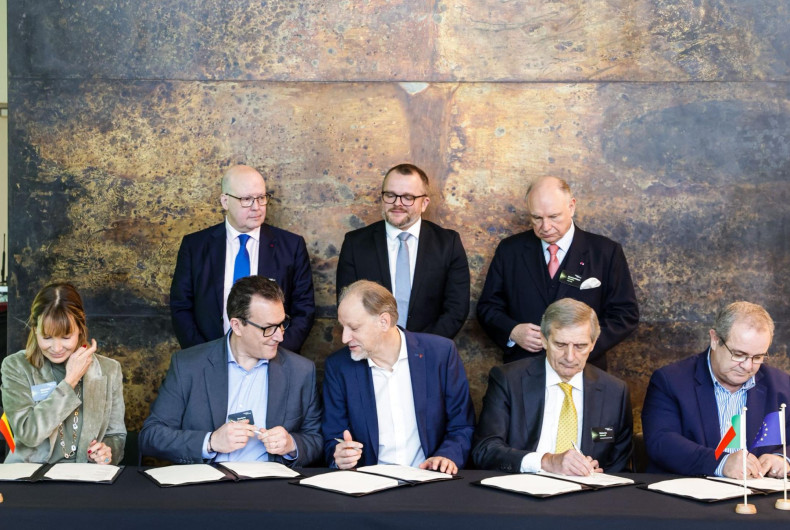
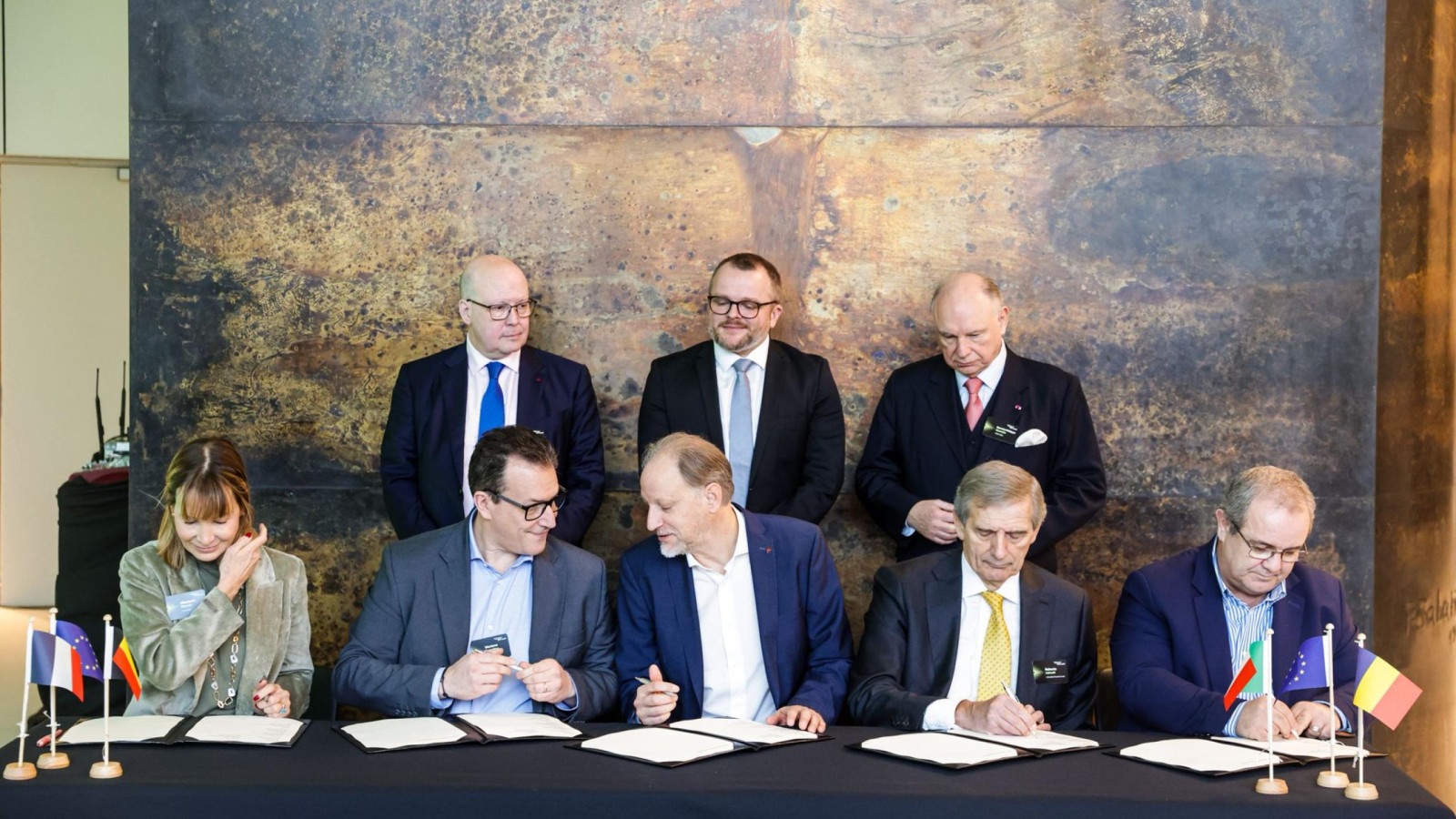
The European nuclear innovation ecosystem is taking an important step forward. The Italian-French energy company newcleo and the EAGLES consortium signed a cooperation agreement in early February 2026 to jointly develop LEANDREA, a technological demonstrator project for lead-cooled fast small modular reactors (SMRs). This step highlights the growing focus on advanced nuclear energy as part of Europe’s energy transition.
In the presence of Minister of Energy Mathieu Bihet
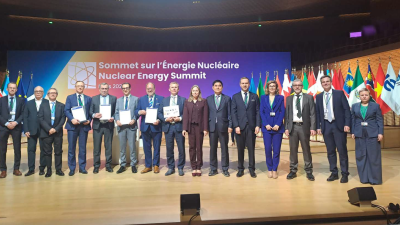
Belgium’s Minister of Energy, Mathieu Bihet, announced the partnership during the EAGLES “Taking the Lead” event in Brussels on 10 February. He underlined its importance for the future of nuclear energy as a lasting pillar of energy independence.
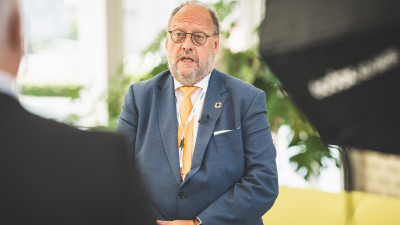
Regarding further financial support, Minister Bihet reiterated the government’s ambition to support the initiative. Furthermore, he also called for faster deployment of third-generation SMRs: “A distinction must be made between third-generation SMRs, which can be deployed immediately, and fourth-generation SMRs, such as those developed by EAGLES, which will follow later. One does not exclude the other. It is important that LEANDREA develops in Belgium, but we can no longer afford to wait with the deployment of third-generation SMRs,” he continued.
“With this project by SCK CEN and the EAGLES consortium, focused on research and innovation around next-generation lead-cooled fast reactors, our country confirms its role in developing a reliable, competitive and low-carbon energy supply. Nuclear energy is a sustainable and lasting pillar of our energy independence. In this context, fast reactors represent an essential pathway forward.”
What is LEANDREA?
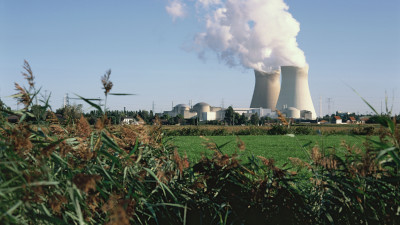
LEANDREA (Lead cooled Experimental Advanced Demonstrator Reactor for Europe Applications) is a technology and testing facility for lead-cooled fast reactors. The installation, which will be built on the SCK CEN site in Mol, is intended to thoroughly test materials and fuels for fast reactors under real conditions — a crucial step in developing safe, efficient and commercially viable fourth-generation SMR technologies. LEANDREA is scheduled for completion in 2034.
The collaboration between newcleo and EAGLES
In a joint commitment, newcleo and the EAGLES consortium have agreed to cooperate more closely in the design and construction of LEANDREA. Both partners aim to leverage synergies by sharing engineering contributions, coordinating joint R&D activities and aligning their technological development pathways.
This alliance strengthens Europe’s position in advanced nuclear technology and helps the continent remain competitive in the global energy market.
Both parties, however, retain their own commercial lead-cooled reactor projects. They are joining forces only during this first phase in research, development, design and promotion of the technology, with the aim of reducing overlap, improving efficiency and accelerating development.
The EAGLES programme follows a stepwise approach towards commercialisation: the LEANDREA Technology Demonstrator in Mol in 2034, followed by the ALFRED Performance Demonstrator in Romania, and finally commercial deployment in 2039. Newcleo, for its part, is developing its own LFR reactor design with commercial rollout planned for the early 2030s. Both projects have previously been recognised by the European Industrial Alliance on SMRs as leading initiatives.
What is the EAGLES consortium?
The EAGLES consortium (European Advanced Generation IV Lead-Cooled Energy System) is a partnership of leading European nuclear research institutions and industrial players, established around the development of a new reactor technology: the lead-cooled fast EAGLES-300 SMR.
- SCK CEN (Belgium) – the Belgian nuclear research centre playing a central role in research and operation of testing infrastructures. The LEANDREA demonstrator will be built here.
- ENEA (Italy) – the Italian national agency for new technologies, energy and sustainable economic development.
- Ansaldo Nucleare (Italy) – an industrial company with decades of experience in nuclear engineering and project management.
- RATEN (Romania) – a Romanian public organisation coordinating research and development in the nuclear sector.
Together, these partners combine their expertise and resources to develop the EAGLES-300 — a 300 MWe lead-cooled GEN IV SMR.
Timeline and objectives
- 2024–2025: Establishment of the EAGLES consortium and launch of an international pre-licensing process with nuclear regulators in Belgium, Italy and Romania.
- 2025–2034: Design and construction of the LEANDREA technology demonstrator in Mol.
- 2036: ALFRED Performance Demonstrator in Romania as an intermediate step towards commercial deployment.
- 2039: Planned commercial availability of the EAGLES-300 SMR.
Why is this collaboration important?
The alliance between newcleo and the EAGLES consortium goes beyond a single project. It strengthens European cooperation in nuclear energy, stimulates technological progress and contributes to a reliable, low-carbon energy supply for the decades ahead. Through joint engineering, shared testing facilities and a coordinated roadmap, the partners aim to achieve faster and more efficient commercialisation.
This collaboration will accelerate the development of a solution that meets expectations for the recycling of spent fuel (erroneously referred to as “nuclear waste” by some).
Harmonised regulation and standardisation
In addition to close cooperation between partners, the EAGLES consortium attaches great importance to early alignment with nuclear regulators. In cooperation with the competent authorities in Belgium, Italy and Romania, the consortium launched an international pre-licensing process for EAGLES-300 — a first of its kind.
Regulatory harmonisation is essential: SMRs are designed for international deployment and serial production. As long as each country maintains its own rules and procedures, developers must repeat the entire licensing process, which slows deployment and undermines economies of scale. Harmonisation enables faster, more efficient and safer SMR deployment.
What is pre-licensing?
Pre-licensing is a structured and exploratory process in which nuclear regulators and technology developers engage at an early stage, before a formal licence application is submitted. The objective is not to grant approval, but to build mutual understanding of safety requirements, technical challenges and the regulatory framework.
For advanced technologies such as lead-cooled SMRs, pre-licensing helps identify potential bottlenecks early and ensures that the subsequent licensing process is more efficient and better substantiated. The approach is generally top-down, starting from overarching safety principles and progressively moving towards more detailed technical discussions.
In a later phase, licensing becomes a formal process. Each national regulator then assesses whether the reactor design complies with all legal and technical requirements relating to safety, security, radiation protection and environmental impact.