
Spirulina in the fight against chronic malnutrition
Spirulina in the fight against chronic malnutrition
SCK CEN has extensive experience in cultivating spirulina through its aerospace research activities. This expertise enables the Belgian Nuclear Research Centre to support research in the Democratic Republic of the Congo on spirulina quality and production potential.
The “Inspiration” Project
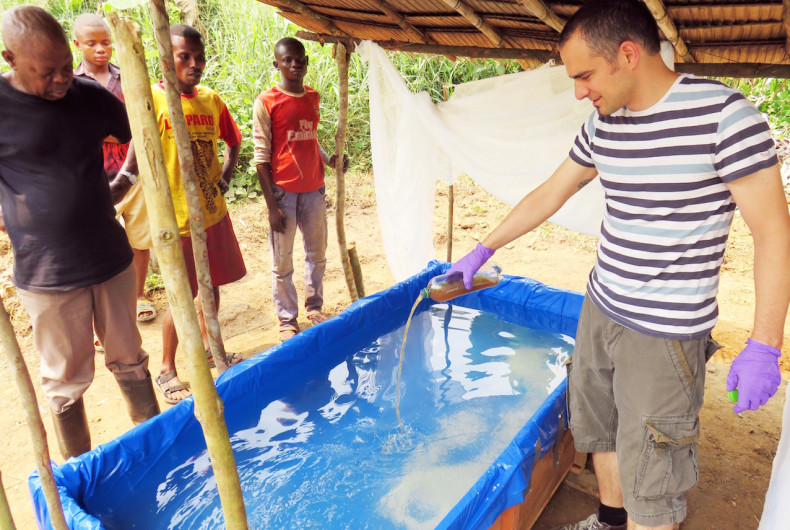
The aim of the “Inspiration” project (INtroduction of SPIRulina in Equatorial Africa To Improve lOcal Nutrition) is to develop spirulina cultivation in the Congo. This algae is rich in essential vitamins and minerals and can help combat chronic childhood malnutrition.
What is Spirulina?
Spirulina (Arthrospira sp.) is a photosynthetic cyanobacterium and one of the smallest, oldest, and most resilient life forms on Earth. Cyanobacteria are responsible for producing approximately 60% of the Earth's oxygen. Under a microscope, the organism appears as a small green spiral, which is how spirulina got its name.
Spirulina occurs naturally in regions such as East and West Africa, Mexico, and South Asia, where it can be harvested from natural salt lakes. However, it can be cultivated and harvested more efficiently in artificial ponds. In these semi-controlled environments, spirulina can be grown with very low energy requirements while achieving high yields, superior quality, and improved safety. Nuclear technology can also play a valuable role: irradiation-induced mutagenesis can produce spirulina strains that grow more rapidly.
In industrialized countries, spirulina is best known as a dietary supplement and immune-system booster.
With a protein content of approximately 70%, spirulina has one of the highest protein concentrations of any food source. This makes it particularly valuable for addressing protein deficiencies commonly found in developing countries. Even more importantly, spirulina contains high levels of iron and vitamin A, two nutrients that are often severely lacking in cases of malnutrition.
The benefits of spirulina in the Congo
When incorporated into the traditional diet of Congolese families, spirulina can help combat chronic childhood malnutrition. The local development of a spirulina production sector also stimulates small-scale entrepreneurship, creating broader economic and social benefits for communities. Women play a particularly important role in this process, as they are central to incorporating spirulina into the daily preparation of family meals.