What comes out of the cooling towers at nuclear power stations?
What comes out of the cooling towers at nuclear power stations?
Have you ever wondered what was the smoke coming out of the cooling towers at a nuclear power station? Don’t worry: the plume of smoke contains no CO₂, nor any radioactive or harmful substances. It is simply water vapour.
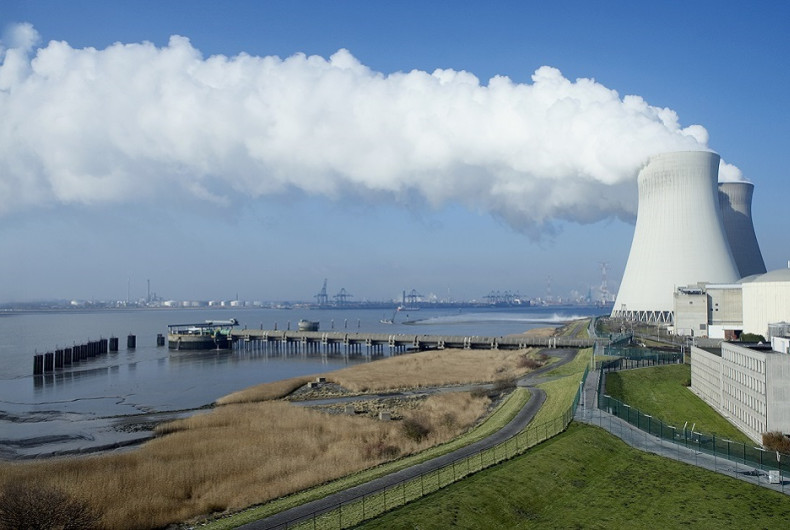
Water vapour – and not everyone knows this!
Thanks to a survey carried out in 2021, we know what Belgians think comes out of the cooling towers at nuclear power stations:
- 58% think it is water vapour
- 13% think it is radioactive gaseous effluents
- 9% think it is CO2
- 20% don’t know
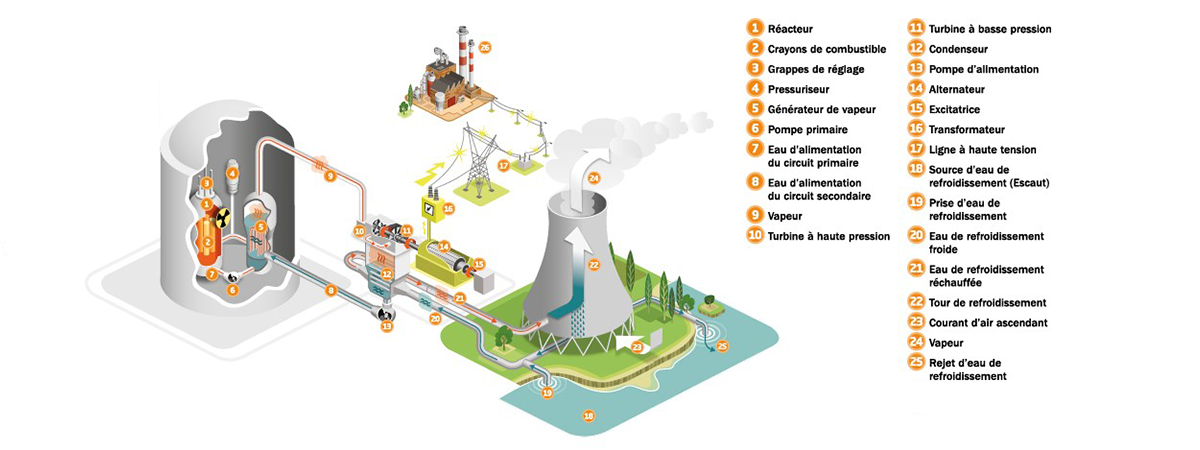
A nuclear power station is like a giant kettle. The energy created by the fission of heavy atoms is used to heat water which, once it has turned to steam, drives turbines that generate electricity.
There are several water circuits in a nuclear power station: a primary circuit, a secondary circuit and a cooling circuit. This third circuit draws water from the river (the Meuse for Tihange, and the Scheldt for Doel), cools the water in the secondary circuit, and is then partly discharged back into the river and partly released into the air as steam.
It is therefore water that comes out of the cooling towers, not CO₂, which makes nuclear power stations one of the lowest-carbon forms of energy.